A sofa is one of the hardest-working items in a home and one of the easiest to damage with the wrong cleaning method. Fabric and leather behave very differently. A method that refreshes one can stain or dry out the other. Before any upholstery is cleaned, the material and its care code should be identified.
This guide covers how each type is cleaned and what Johor Bahru's humidity does to upholstery over time.
What Humidity Does to Upholstery
Sofas absorb moisture from the air and from the people who use them. In this climate that means fabric upholstery holds damp, which supports dust mites and, over time, a musty smell. Leather faces the opposite risk in air-conditioned rooms: it can dry and crack if it is cleaned with harsh products and never conditioned. Both materials also collect body oils, food residue and dust that work into the surface.
Cleaning Fabric Upholstery
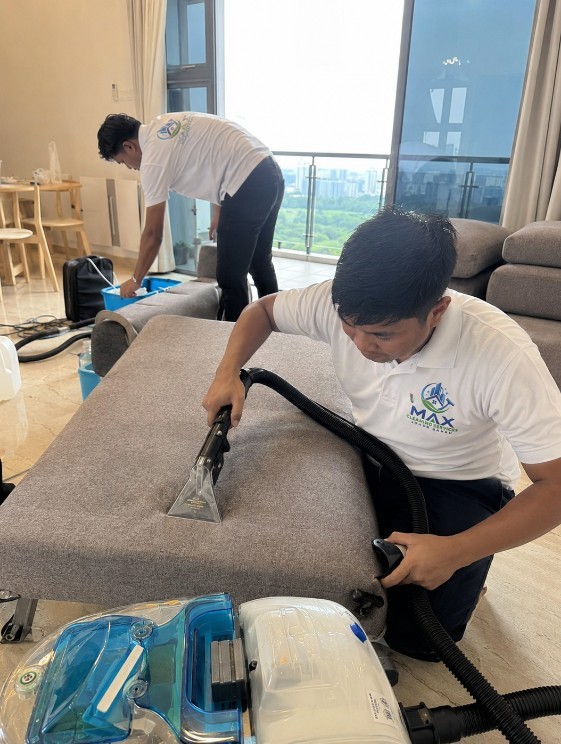
Fabric sofas are usually cleaned by extraction. The surface is vacuumed first to lift loose soil. Stains are pre-treated according to the fabric type. A cleaning solution is worked into the fabric and then extracted, lifting embedded dirt and allergen along with the moisture. Drying matters here: a fabric sofa left damp in humid air can smell worse than before it was cleaned, so controlled drying is part of the job.
The common mistake at home is over-wetting. Soaking a fabric sofa with a household spray and a cloth pushes soil deeper and leaves moisture the room cannot dry, which invites mould and odour.
Send us a photo and the care label if you can find it. We confirm the right method before we start, so the material is never put at risk.
Cleaning Leather
Leather is cleaned, not extracted. It is wiped down with a product suited to leather, which lifts oils and surface soil without stripping the finish. It is then conditioned to keep the material supple, which matters in air-conditioned homes where leather dries out. Harsh general-purpose cleaners are avoided, since they can strip the protective finish and leave the leather prone to cracking.
Reading the Care Code
Most upholstery carries a care code on a hidden label. W means a water-based cleaner is safe. S means solvent only, no water. WS means either is acceptable. X means vacuum only, no liquids. Identifying this code before cleaning is what separates a safe job from a damaged sofa. A professional checks it as a matter of course.
Upholstery holds allergen the same way a mattress does, so the cleaning interval is similar: every three to six months in this climate, and sooner for homes with pets or young children. The same logic applies to carpet cleaning. our home cleaning services in Johor Bahru cleans fabric and leather upholstery for homes across the Johor Bahru area, always to the material's care code. Check our coverage to confirm your address is on our route.